

Best for: projects launching a token to the public who need a compliant offering without standing up legal, KYC, payments, and distribution infrastructure themselves.
How it works
A public token sale on Passage runs through three phases: setup, live sale, and post-sale distribution. Passage runs the platform; you provide the offering details, manage your community, and review participation.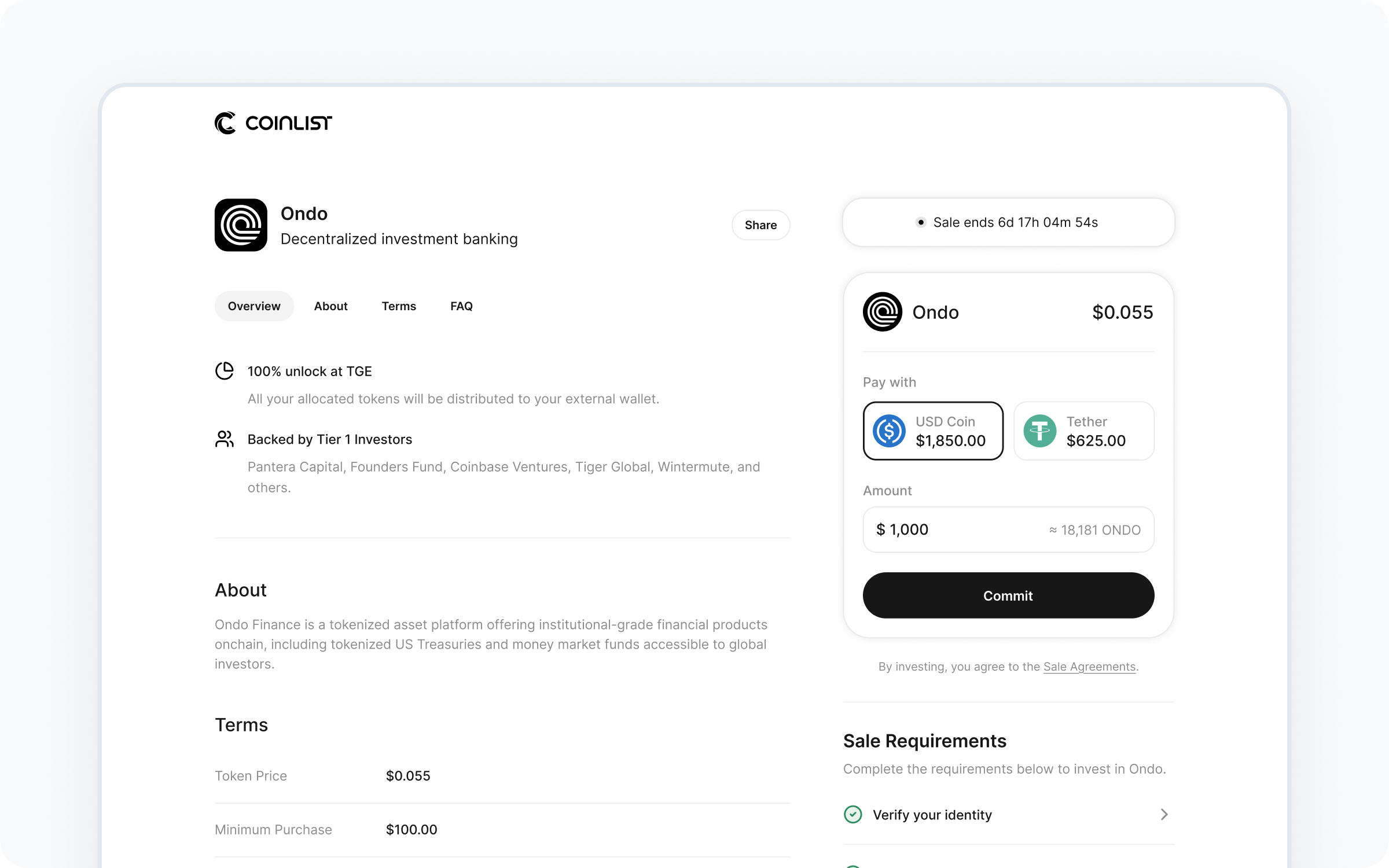
Who handles what
Passage handles
- KYC and identity verification
- Jurisdiction and eligibility checks
- Payment collection and settlement
- Smart contract deployment
- Token distributions and vesting
- Regulatory compliance for the offering
- Investor disclosures and doc signing
- Sale-day infrastructure and scaling
You handle
- Token economics and sale terms
- Marketing and community comms
- Post-sale reporting to your investors
- Long-term token operations
Walkthrough
Set up your offering
Work with your Passage account manager to define the offering: token details, sale rounds, pricing, caps, accepted currencies, eligible jurisdictions, and vesting schedule. Submit required documentation for compliance review.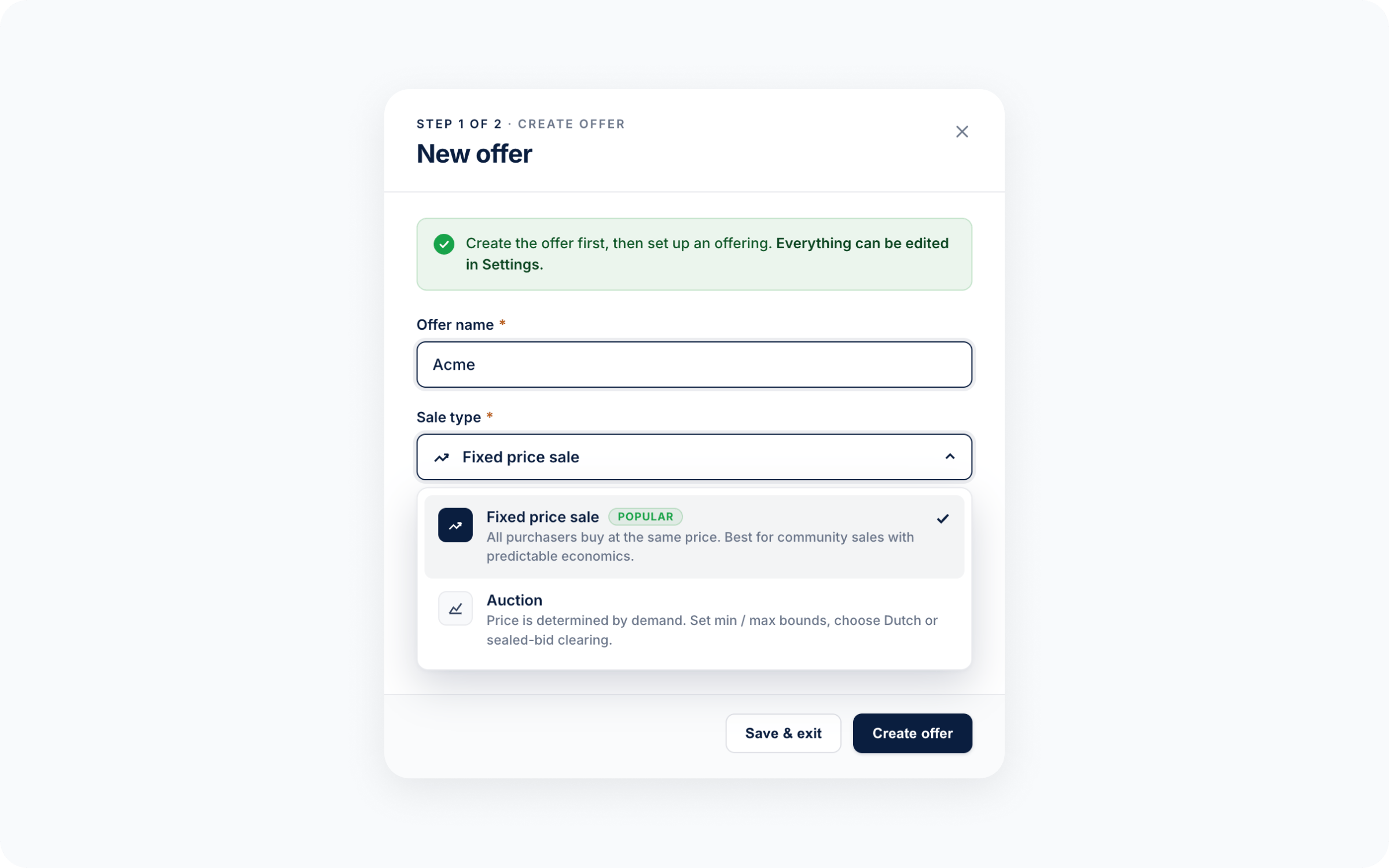
Configure the offering
Once compliance review is complete, your offering goes live in the Passage admin. From here you can fine-tune sale rounds, schedule the sale, attach offer documents, and preview the public-facing offer page before launch.Typical configuration variables include:
- Schedule -
starts_at,ends_at, time zone - Pricing and valuation - price per token, fully diluted valuation, total raise cap
- Sale rounds (options) - per-round caps, pricing, and eligibility
- Accepted currencies - which
funding_assetsparticipants can pay with - Vesting and lockups - cliff, duration, unlock schedule per round
- Eligibility - jurisdictions, KYC level, accreditation requirements
- Documents - offer terms, disclosures, agreements participants sign
Launch and monitor
Once you go live, the sale runs on Passage’s infrastructure. Track progress in real time from the dashboard: total raised, buyer count, per-round status, and agreement tracking.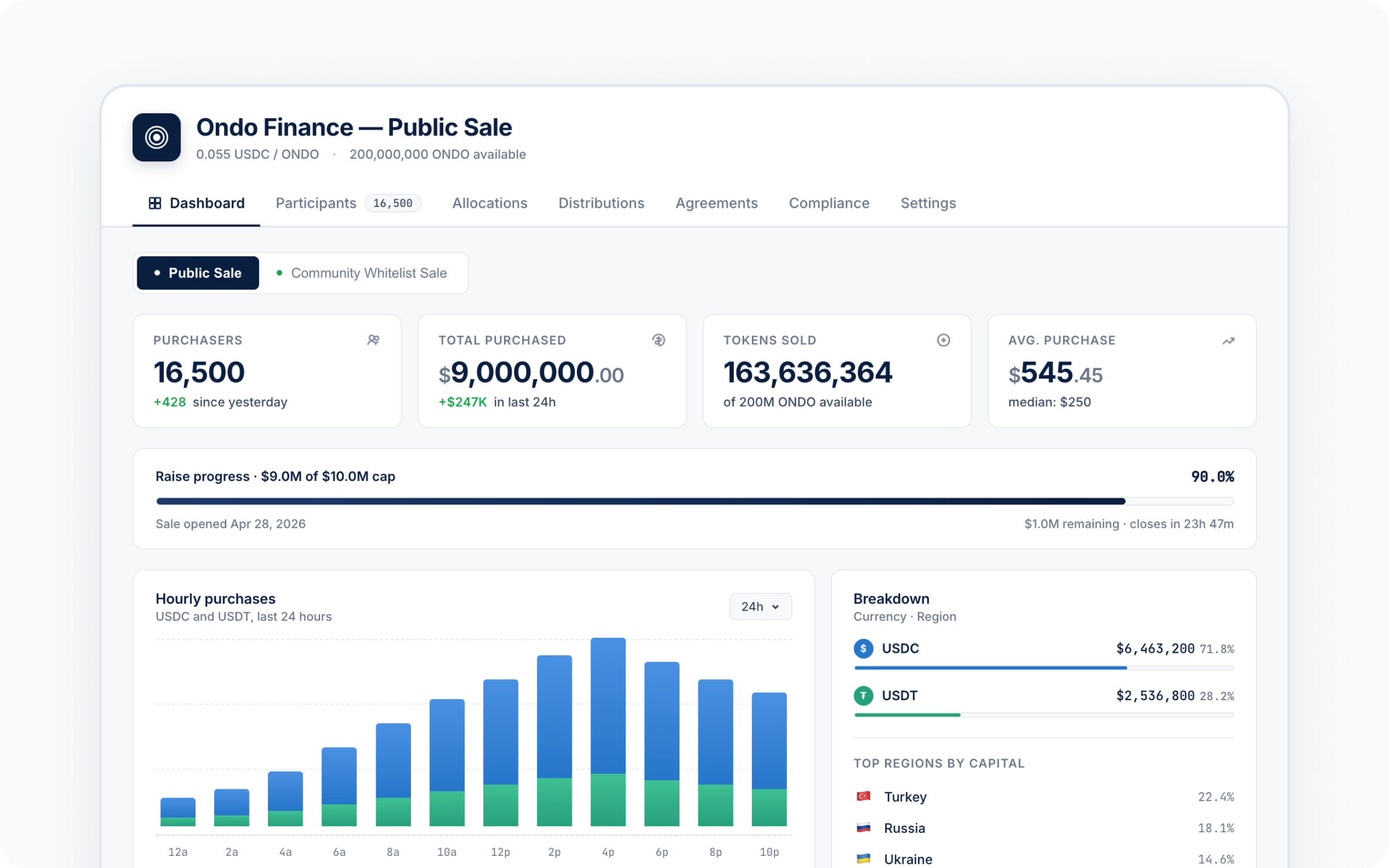
Build it
The setup, configuration, and dashboard above happen in the Passage admin - no engineering work required. If you also want to surface your offering in your own app or website (for example, to drive eligible users into the participation flow), the SDK has you covered:SDK quickstart
Install
@coinlist-co/react and wire OAuth.Display offer details
Render your offering inside your own product.
Track participations
Pull participation status into your own backend.
Common questions
How long does setup take?
How long does setup take?
Compliance review time is dependent on how quickly you can provide your entity documentation. Setup, testing, and configuration can take less than a week.
Which jurisdictions are eligible?
Which jurisdictions are eligible?
Eligibility varies by offering type, and it is recommended that you determine which jurisdictions to exclude with your own legal counsel.
Can I run multiple sale rounds?
Can I run multiple sale rounds?
Yes. You can configure separate rounds (for example, two different options with different pricing and vesting) with different pricing, caps, eligibility, and timing. Each round appears as its own offer option.
Can investors participate from my own website?
Can investors participate from my own website?
Yes - use the SDK to surface your offering inside your product. Eligibility and payment still flow through Passage, but discovery and entry can live in your app.
What happens if a sale doesn't reach its cap?
What happens if a sale doesn't reach its cap?
Sale terms - including minimum thresholds and refund policy - are set during configuration. Passage executes whatever you’ve defined.